
Yerba Mate Origins: From Guaraní Traditions to Modern Cups
Updated: Sep 8, 2025
While now it might be a bottled buzzword, yerba mate has always been and will always be, first and foremost, a ritual of connection. Within its leaves exists a beverage with stories that span centuries, passed down through indigenous wisdom, colonial expansion, and into a newfound modern act of wellness. Learning about yerba mate feels more crucial than ever, especially with its rising popularity from energy drinks to artisanal blends.
This journey is not about another medicinal plant. It honors the cultural origins that gave us one of South America’s most endearing practices. From the revered gourds of the Guaraní to the clean, functional energy of wellness seekers today, the journey and origin story of yerba mate illuminates resilience, adaptability, and connection.
Let us take a journey, from the forest to the flask, as we explore how ancient wisdom is reflected in a modern cup.
The Indigenous Roots: Guaraní Wisdom and Daily Ritual
Long before Spanish invaders and conquerors set foot in South America, the Guaraní people of what is now Paraguay, northeastern Argentina, and southern Brazil encountered something completely new and unique in Ilex paraguariensis, also known as yerba mate.
To them, yerba mate was not just a drink. It was a divine relationship with their creators, the Gods- a meeting between the physical and spiritual worlds.
The origin story of yerba mate begins in these Indigenous communities, where the drink has served, and still serves, several compelling functions. Warriors would drink yerba mate before embarking on long journeys, utilizing its natural stimulant properties to prepare for the highest levels of energy the drink could offer.
Shamans would incorporate the drink into their spiritual ceremonies, utilizing the effects of yerba mate to purify the body and achieve profound experiences and spiritual focus, often in conjunction with meditation.
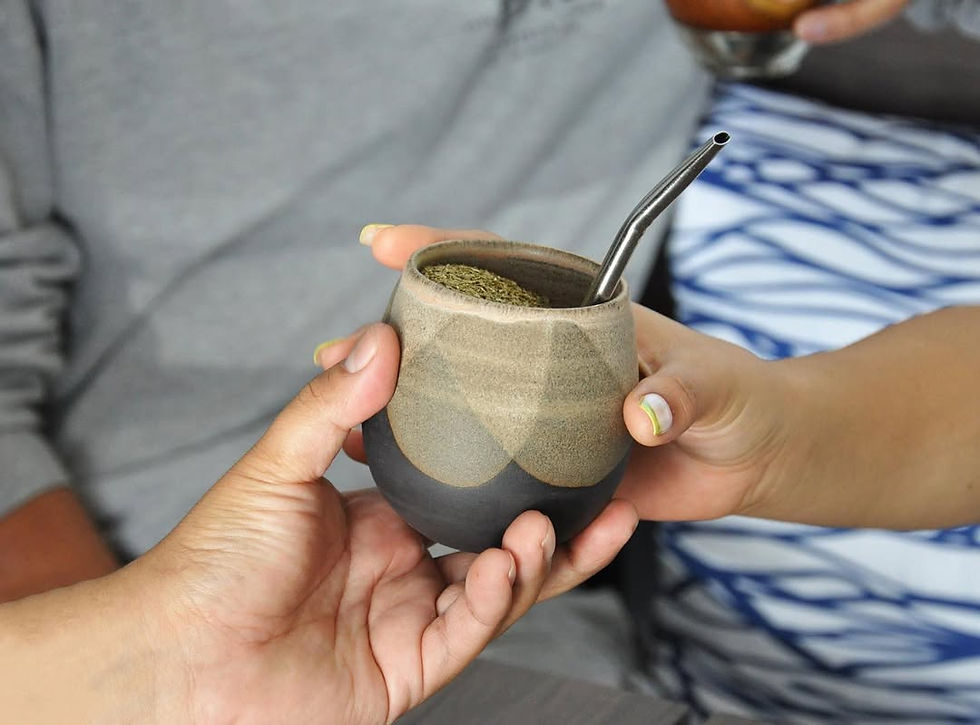
Traditional yerba mate preparation was (and is still) very particular with respect to its art. The Guaraní people scraped leaves from the wild mate tree, dried them by burning, and finally packed hollowed gourds, or “guampas,” full of the crushed leaves.
To drink, the Guaraní used a filtered metal straw, or ‘bombilla,’ and eventually sipped the potentially bitter, earthy elixir at their leisure, allowing its functional qualities to unfold naturally.
Today, when we consume yerba mate, we must remember that every sip begins here.
Colonial Expansion and Cultural Preservation
When Spanish colonizers arrived in the 16th century, they initially regarded the consumption of mate with suspicion, as it was viewed as a “devil’s drink”, given its central nature in the spiritual practices of Indigenous peoples. Soon after, colonizers recognized the stimulating properties and economic potential of mate. Jesuit missions were the first to cultivate mate throughout the region, establishing plantations in Paraguay, Argentina, Uruguay, and southern Brazil.
While commercial exploitation and attempts to suppress the cultural practices associated with yerba mate were extensive, the tradition remained firmly rooted in its origins. Indigenous and mestizo communities, always resilient, continued to uphold the ceremonial aspects while ensuring that yerba mate's history is connected to its spiritual origins, not its commercial purposes.
The colonial period represents a crucial chapter where yerba mate could have lost its cultural soul entirely. Instead, it demonstrated exceptional resilience, adjusting to colonial and commercial systems while remaining true to its character.
From resistance to resilience, the story brewed on.
Global Rise: Wellness Trend Meets Ancient Tradition
The 20th and 21st centuries saw yerba mate capture worldwide attention, primarily due to athletes seeking clean energy, health enthusiasts interested in its antioxidant content, and creatives in search of sustained focus without the coffee jitters. Professional soccer players have long attributed improved performance to yerba mate, helping build global interest in the traditional energizer.
Some brands establish marketing campaigns that reference mate’s nutrients: Vitamins A, C, E, and B, essential minerals, like potassium and magnesium, and powerful antioxidants called saponins. With the combination of caffeine, theobromine, and theophylline, yerba mate provides energy without the midday crashes that often occur.
With that recognition, however, comes the increased chance of cultural appropriation. Some brands promoted yerba mate stripped of all meaning, as just another energy drink. The challenge was to encourage interest in yerba mate by sharing its traditional benefits while providing context to its history.
This is where intentional brands developed purpose in bridging modern formats with cultural connection.
Modern does not have to mean disconnected.
The Erva Approach: Tradition Meets Everyday Ease
At Erva Brew, understanding the origin of yerba mate is not just a matter of historical curiosity. It is our foundation. When we discuss our sourcing practices, we prioritize relationships with our mate-growing communities. As we expand globally, we ensure that we are reinvesting in the region where this tradition originated. We maintain relationships with farms that operate with sustainable growing practices and honor the cultural knowledge that has sustained these plants for generations.
Our formulations reflect this cultural consciousness. When we develop a loose-leaf blend to be enjoyed in a traditional gourd or a ready-to-drink cold blend, we maintain the plant's balance and avoid using excessive artificial additives that would detract from the plant's integrity. Our gourd-friendly loose-leaf collection enables contemporary mate drinkers to elevate their experience to the level they deserve. At the same time, our cold-brewed blends provide benefits in situations where it isn't feasible to partake in a ceremony.
A perspective like this acknowledges that honoring traditions is not synonymous with refusing adaptation. Instead, it ensures that adaptation serves the tradition, rather than replacing it.
In the end, we are not just making drinks, we are preserving a ritual.
Sip It Forward: How to Honor the Tradition in Your Daily Routine
Understanding the origins of yerba mate can influence how you consume it. Use a gourd and bombilla whenever possible; the established ritual is part of thousands of years of tradition.
Traditional yerba mate drinking emphasizes mindfulness over efficiency; for example, sipping slowly allows you to recognize the dynamic flavors in the drink and contemplate the plant itself.

Share your gourd with other people. The communal era has been and always will be an essential aspect of yerba mate. Select Erva Brew, which prioritizes ethically sourced yerba mate.
There is nothing mechanical about this wellness ritual.
The Past is in the Present
The story of yerba mate's origin represents continuity, as ancient wisdom passes through time without losing its integrity. The Guaraní shamans of the past, as well as today’s yoga practitioners and conscious consumerists, all share a unique affinity for this plant that transcends cultures and generations.
Erva Brew seeks to honor both function and foundation in their mate products, serving today's needs while respectfully retaining a degree of cultural context. As yerba mate continues its path across the globe, we must all be vigilant to ensure its growth does not come at the sake of its purpose.
Drink with awareness. Drink with intention. Drink Erva Brew.


Comments